School of Earth and Environment

€RUPT European Research on Understanding Processes & Timescales in magma systems

Erupt logo

Who is involved?

  • Department of Geological Sciences, University of Durham, UK
  • Dipartimento di Scienze della Terra, Università degli Studi di Firenze, Florence, Italy
  • Geoscience Centre Goettingen, University of Goettingen, Germany
  • Osservatorio Vesuviano, Naples, Italy
  • Department of Earth Sciences, University of Leeds, UK
  • Institute of Earth Sciences “Jaume Almera, Barcelona, Spain
  • Department of Geology, University College Dublin, Ireland

What are the main objectives of €rupt?

  • To establish the role of magma chamber replenishment in triggering volcanic eruptions and differentiate between physico-chemical processes of magma mixing and simple heating by new inputs
  • To evaluate the repose time of volcanic systems and how these relate to textural and chemical records in magmatic rocks which may serve as pre-monitors for subsequent eruptions
  • To improve our understanding of the eruptive behaviour of key European volcanoes (Teide, Vesuvius/Campi Flegrei, Stromboli) for the benefit of volcano observatories and civil defence authorities.

An understanding of volcanic systems is critical to both the geological and environmental sciences. The conditions under which magmas are stored and differentiated control their delivery to the surface, the size and type of volcanic eruption and the volume and species of volcanic gases emitted. Volcanic hazards are directly related to these factors. The explosivity and size of an eruption, in the context of the geographical environment (topography, climate, population distribution), determines the risk posed to life and property. Beyond immediate risk, environmental degradation follows the eruption/deposition of volcanic materials over the land surface, and injection of gases (CO 2, H 2S, SO 2) into the atmosphere contributes to climate change.

Important questions concerning the nature of volcanic eruptions – how big?what type? how frequent? can be addressed by studying the magmatic rocks erupted from a particular volcano. Our objective in €rupt is to develop new methodologies which relate the characteristics of volcanic rocks to the conditions in the high-level magma storage systems which lead to the eruption of the volcano. To date, volcanic hazard risk assessment typically has been addressed through volcanological evaluation of post eruptive criteria – the volumes, distribution, sedimentological characteristics and componentry of the erupted products. Such features are largely predetermined by the conditions and timescales of magma storage and differentiation prior to eruption. Extending the volcanological constraints to integrate the geochemical and physical record of magma differentiation that is preserved in the rocks provides the underlying rationale for €rupt. This new approach will enable us to estimate the rate at which magma differentiates, the conditions (pressure, temperature, volatile content) of magma storage and the architecture, in terms of relative volumes, of the magma storage system.

For more than a century, interpretation of the important processes that control magma differentiation has been based on the textures of the volcanic rocks, in particular the relative distribution, sizes and shapes of the different mineral types, and the volcanic glass or fine-grained groundmass that constitute the rock. It follows, then, that applying quantitative geochemical methods on the scale of these textural features (millimetres-to-microns) will enable us to understand better, reconstruct and model the pre-eruptive evolution of volcanic systems. The crystals erupted as part of a volcanic rock retain a detailed record of changes in magma conditions over the time that they crystallised in a magma storage system. We will use innovative microanalytical methods for evaluating magmatic processes and their rates. The diverse combined skills and experience of the €rupt participants will generate an understanding of what happens to magmas as they make their way through the crust in preparation for eruption at the Earth’s surface.

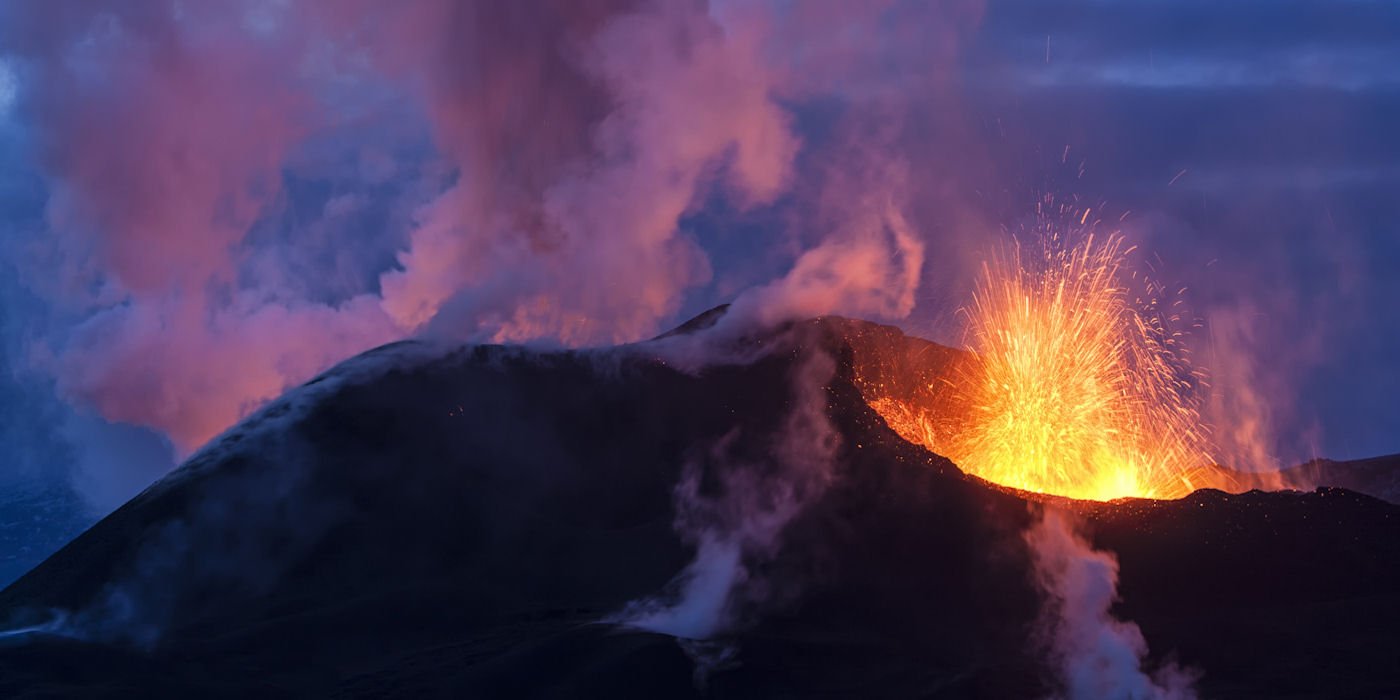
Stromboli - the lighthouse of the Mediterranean

Practical volcanological research that may aid hazard mitigation efforts has traditionally been the domain of 1) geophysicists who make real-time measurements of ground deformation, earthquakes and gas emissions which may precede and accompany eruptions, and 2) field volcanologists who study the architecture and componentry of deposits from past eruptions to determine patterns of volcanic behaviour to use as a predictive tool.   The geophysical approach is limited in being unable to investigate past events. The volcanological approach is limited by the lack of connection with events occurring beneath the vent. We will add a new dimension with our largely geochemical approach of using new microanalytical methods to interrogate the erupted products and understand the conditions of magma storage and differentiation which ultimately control eruption frequencies and types. This approach can be integrated with existing volcanological information on the ages and types of eruptions, and, because we will work on currently active European systems (e.g. Stromboli) we will be able to make a connection between magma storage conditions and the geophyiscial signals of eruption.

ERUPT operates from two complementary perspectives:-

  1. Generic problems and applications: These include the development of a greater understanding of the relationship between processes and rates of magma mixing, magma system recharge and volcanic eruptions. The outcomes of the research are generic in the sense that the results may be generally applicable to volcanic systems worldwide
  2. Focus on specific magmatic systems: Research emphasis is focused on four active European volcanic systems (Stromboli, Vesuvius and Campi Flegrei in Italy and Teide on Tenerife, Canary Islands) and a number of older Italian sub-volcanic systems in which erosion has exposed the roots (“fossil magma chambers”) of formerly active volcanoes. These targets have been selected because:
    1. The active volcanic systems of Vesuvius/Camp Flegrei represent the greatest volcanic hazard to human populations and national/international economies in Europe
    2. The four active volcanic systems selected for study have different periods of dormancy (inactivity) between major eruptive episodes, ranging from years to several centuries
    3. Members of the ERUPT consortium have considerable background research experience in the study of these systems

An ERUPT funded PhD student Joaquin Cortes is based at Leeds

ERUPT Project web site.

Marjorie Wilson's home page

Magmatic Processes Research Group