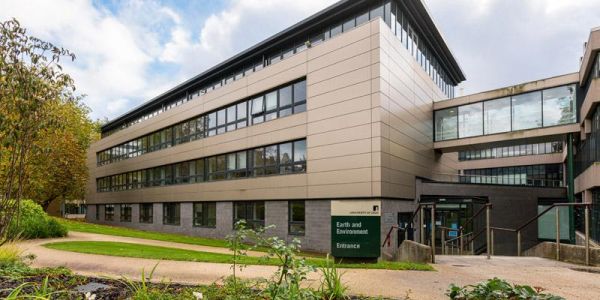
School of Earth and Environment
Rock formations

Overview

What is Meteorology and Climate Science?

Understanding and prediction of the Earth's atmosphere is a matter of extraordinary national and international importance and the need for knowledge and practical skills in this area is increasing. Climate change, air pollution and severe meteorological events are among the most crucial environmental issues of the day. The School of Earth and Environment is one of the few places in the UK offering a degree focused entirely on Meteorology and Climate Science. This builds on the international research excellence of the Institute for Climate and Atmospheric Science (ICAS) based in the School. The School also hosts the National Centre for Atmospheric Science (NCAS). This degree is accredited by the Royal Meteorological Society.

This programme is a four-year Undergraduate Masters degree (MEnv). Students on this four-year scheme enjoy the unique opportunity of spending their third year in USA, and take Masters-level modules during Year 4, in order to achieve the Undergraduate Masters degree. Students benefit enormously from spending a year overseas, which broadens their horizons and demonstrates a high degree of independence; these are attributes which are highly valued by prospective employers. The MEnv degree is a variant of the already well established and successful BSc Meteorology and Climate Science programme (the first two years are identical). It forms part of the best-established Earth and Environment year abroad programme in the UK and is accredited by the Royal Meteorological Society.

Why study MEnv Meteorology and Climate Science?

A strong background in the physical sciences is ideal for this degree. Students are provided with the fundamental scientific methodology in mathematics, physics and chemistry in order to understand the complex behaviour of Earth's atmosphere and the climate system. You will as students acquire knowledge and skills in all the main branches of atmospheric science, including atmospheric physics, meteorology, atmospheric chemistry and climatology. A distinctive feature of the course is the emphasis on understanding the processes in the atmosphere and the ability to put that knowledge to practical use, rather than the theoretical approach of more traditional meteorology courses. This includes practical experience at weather forecasting and field work courses in each year. This approach reflects the research strengths of the School, provides you with a challenging and distinctive degree course and equips you for future careers in this important area of science.

Your understanding of climate change and meteorological issues is valued by the Met Office and commercial weather forecasting companies, by the armed forces, by public organisations such as local authorities and the Environment Agency and by commercial sectors such as the insurance industry. Many students go on to further study in preparation for an academic or research career. Typically, our graduates successfully pursue careers in meteorology, climate science and air pollution as well as in industry, commerce and government services, where knowledge of the atmosphere is increasingly essential to policy and decision making.

Two aspects make the MEnv degree at Leeds University a popular choice:

  • The year abroad study will count academically towards the degree. You will gain in-depth knowledge and experience studying meteorology and climate science in a US university.
  • The integrated Masters study is an attractive option for students. After the third year abroad, students will return to Leeds to pursue a final year to qualify for the Master in Meteorology and Climate Science (MEnv, BSc) degree. Students will have a very wide choice of modules to choose from in their fourth year, and are given a great degree of freedom to choose their focus.

How to Apply

Find out all you need to know about applying.

Search site
What interests you?